

 English
 русский
 Español
 简体中文
简体中文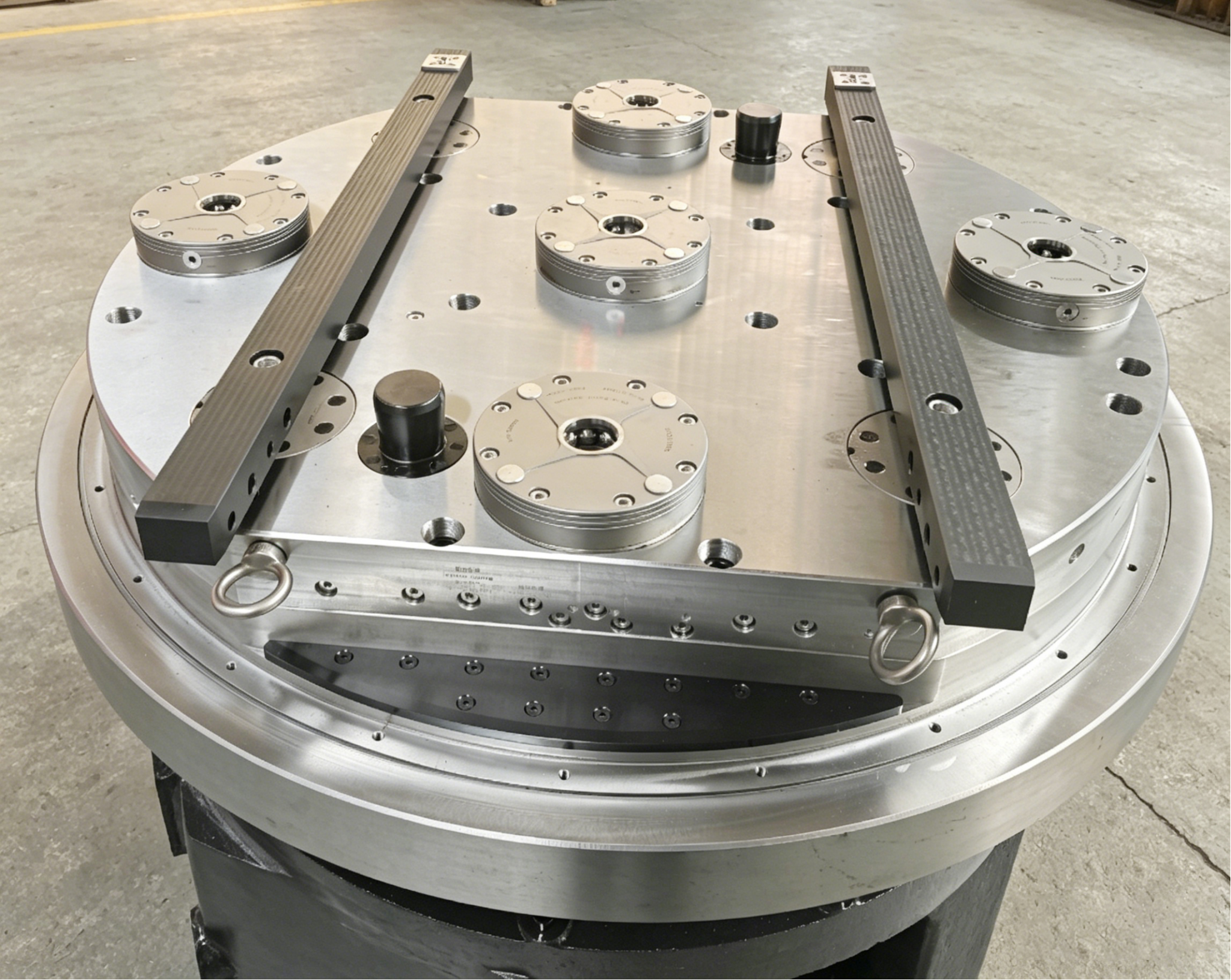
The night shift operator calls maintenance before the robot has run for an hour. The arm comes down to the same teach point every cycle, but the part is 0.03 mm off in the fixture. Within minutes the...
Read More
Can Zero-Point Base Plate Be Installed Directly on Existing T-Slot Machine Tables?
Introduction
In modern manufacturing equipment upgrading, factory supervisors and process engineers frequently inquire about a practical retrofitting solution:whether a zero-point base plate and quick-change fixture system can be mounted on standard T-slot machine tables.
Many production workshops intend to upgrade clamping efficiency without purchasing new machine tools, realizing low-cost and fast workpiece changeover. The clear conclusion is that such retrofitting is technically feasible. However, simple bolt-only fixation cannot ensure long-term stability. The whole upgrade requires standardized precision operation and avoids common construction pitfalls.
1. Feasibility & Precision Adaptation of T-Slot Table Zero-Point Retrofitting
The original factory T-slot worktable is a universal load-bearing structure, which can be equipped with zero-point positioning base plates. To maintain long-term processing stability, the base plate and the worktable must form an integrated rigid structure.
If fixed merely by T-bolts, the equipment may work normally in the short term. Yet under continuous cutting force and vibration in mass production, the base plate is prone to micro displacement, resulting in gradual attenuation of repeat positioning accuracy.
A standardized and reliable zero-point base plate upgrading process includes three core steps:
1.1 Pre-Fixation & Stable Support
Utilize the original machine tool T-slots and matched T-bolts to complete preliminary positioning and locking of the zero-point base plate. High-quality base plates adopt P20H alloy steel, featuring excellent corrosion resistance and structural stability, adapting to long-term wet processing environments with cutting fluid immersion.
1.2 Taper Pin Positioning (Core Procedure)
T-bolts only provide vertical clamping force and cannot resist lateral impact force and cutting torque generated during machining. After precise calibration of the base plate position, two φ16 taper pins are installed for dual positioning. This structure firmly locks the relative position between the base plate and the worktable, effectively eliminating displacement risks in long-term operation.
1.3 Full Precision Calibration & Acceptance
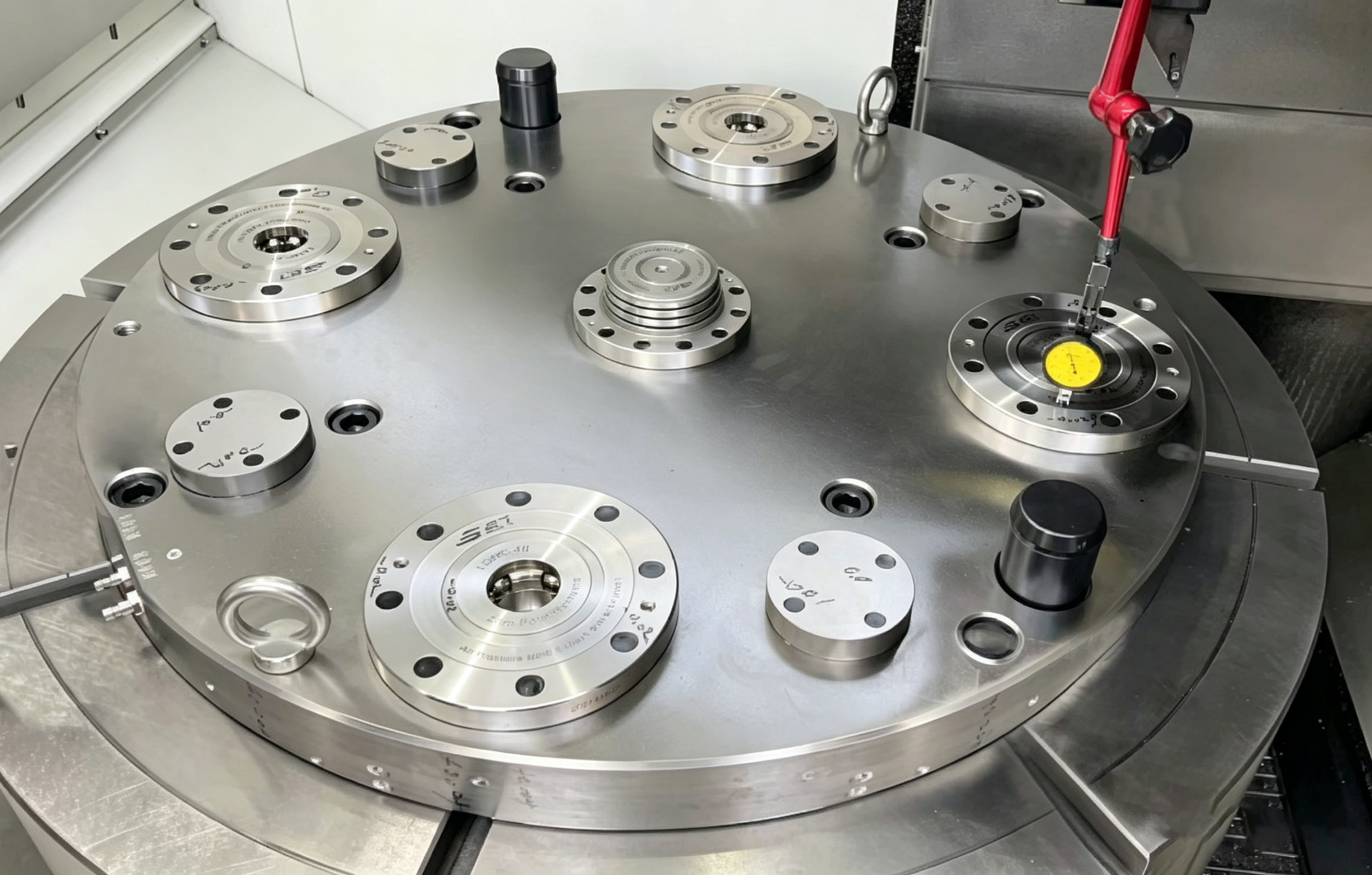
After installation and fixation, conduct comprehensive precision detection and correction. The inspection covers base plate flatness and coaxiality between the base plate reference and the machine spindle. According to industrial standard acceptance specifications, the plane runout after pallet locking is controlled within 0.02mm, meeting the precision requirements of most mechanical processing scenarios.
2. Standard Configuration Solution for T-Slot Table Zero-Point Upgrade
Based on abundant on-site retrofitting experience, the mature zero-point quick-change system configuration for T-slot worktables is summarized as follows, suitable for most vertical lathes and machining centers:
-
Zero-Point Positioners Layout: Equipped with 4–7 sets of positioning units according to the base plate size, adopting the stable layout of 1 center unit + 3–6 peripheral units to balance stress distribution.
-
Load-Matched Unit Selection: Select positioning units with corresponding clamping force based on workpiece weight and cutting load. High-load and hard material processing scenarios are matched with heavy-duty zero-point units to enhance overall rigidity.
-
Pre-Guide Pins: Equipped with coarse guide structures to assist rapid pallet landing and positioning, reducing manual operation difficulty and improving changeover efficiency.
-
Integrated Pneumatic Circuit: The base plate is built with quick-insert air ports to support zero-point unit unlocking, seating detection and status feedback.
-
Complete Protection Components: Configured with bottom protective cover plates to block iron scraps, cutting fluid and contaminants from invading the positioning contact surface, extending the service life of the positioning system.
3. Three Critical Pitfalls to Avoid in Zero-Point Retrofitting
Most unstable operation problems of modified zero-point systems stem from non-standard construction and unreasonable configuration. The three most common hidden risks are sorted out for reference:
3.1 Improper Base Plate Material Selection
Long-term immersion in cutting fluid will cause oxidation and corrosion of ordinary steel plates, resulting in pitted surfaces and flatness deviation. For sustainable wet processing working conditions, P20H or higher-grade alloy base plates are recommended to ensure stable surface accuracy and anti-corrosion performance.
3.2 Bolt-Only Fixation Without Positioning Pins
Single bolt locking cannot offset lateral cutting force and torque. In long-term batch production, subtle displacement of the base plate will accumulate, leading to reduced repeat positioning accuracy and occasional workpiece dimension deviation. Matching taper pin positioning is the most cost-effective and reliable solution.
3.3 Unplanned Pneumatic Circuit Layout
Pneumatic zero-point systems rely on stable air supply to complete unlocking and signal detection. In the early retrofitting stage, a reasonable pneumatic layout is required. For rotating equipment such as vertical lathes, supporting rotary distributors are essential to ensure continuous and stable air supply and reserve space for subsequent intelligent upgrading.
4. On-Site Retrofitting Case & Efficiency Improvement Data
A manufacturing enterprise in Ningbo completed the zero-point system upgrading for its vertical lathe with original T-slot worktable. The project adopted a φ1000 specification zero-point base plate, matched with standard pallets and tension pins to build a complete quick-change fixture system.
After stable operation and testing, the project achieved prominent optimization effects:
-
Fixture Changeover Time: Reduced from the traditional 15–20 minutes manual clamping to within 30 seconds for zero-point quick change.
-
Positioning Accuracy: The repeat positioning accuracy of the mother-disk system is stably controlled within 0.01mm.
-
Heavy-Duty Processing Capacity: Supports high-hardness workpiece cutting of HRC58-64, with a single cutting depth up to 2mm, maintaining stable processing rigidity.
-
Intelligent Expansion: Equipped with automatic air blowing cleaning and seating detection functions, compatible with automatic loading and unloading production lines for subsequent intelligent upgrading.
5. Conclusion
Existing standard T-slot machine worktables support zero-point base plate installation and quick-change system retrofitting. It is a highly practical equipment upgrading scheme to activate old machine tool capacity and improve production efficiency with low investment.
To ensure long-term stable operation of the modified system, three key standards must be implemented: adopt anti-corrosion alloy base plates suitable for industrial processing environments, install taper pins to avoid base plate displacement, and complete pneumatic circuit planning in advance for intelligent expansion.
Equipment upgrading does not require frequent replacement of new machine tools. Standardized zero-point quick-change transformation can effectively shorten fixture changeover time, reduce manual adjustment errors, and improve machine tool utilization rate for processing workshops.
If you have equipment upgrading plans for old machine tools, you can provide machine type, workpiece size and processing load parameters to obtain customized zero-point base plate retrofitting solutions and professional configuration suggestions.
latest news

- Machine Tending Fixtures: Key Factors Behind a Stable CNC Machining Cell
- 5-Axis Workholding: How Zero-Point Systems and Vises Maximize Machining Stability
- How Do Locating and Alignment Accessories Define CNC Machining Accuracy?
- What Clamping System Delivers the Best Accuracy and Throughput for Your Vertical Machining Centre?
Latest news
-
5-Axis Workholding: How Zero-Point Systems and Vises Maximize Machining StabilityA five-axis machining center is only as good as the workholding that supports it. A fixture that blocks the rotary table or interferes with the cutter path turns a five-axis machine into a three-axis...Read More
-
How Do Locating and Alignment Accessories Define CNC Machining Accuracy?Introduction: The Hidden Cost of Misalignment In CNC machining, the difference between a high-value precision component and a scrap part often comes down to a fraction of a millimeter. While spindles...Read More
-
What Clamping System Delivers the Best Accuracy and Throughput for Your Vertical Machining Centre?Why Clamping Systems Define VMC Performance In vertical machining centres, the clamping system is not a passive accessory—it is the structural link between the machine spindle and the workpiece. A ri...Read More
-
What Is the Fastest Way to Reduce CNC Setup Time with Pallet, Gripper, or Manual Quick Change Devices?In high‑mix CNC production, setup time is the largest controllable drag on throughput. Pallet Quick Change Systems, Gripper Quick Change Devices, and Manual Quick Change Devices each address specific...Read More
-
How Zero-Point Systems Improve Workpiece Stability in 5-Axis CNC MachiningWhy Workpiece Stability Breaks Down When 5-Axis Jobs Get Complex A 5-axis machining center earns its value by cutting five faces of a part without a single manual re-clamp. That promise collapses the...Read More
If you are interested in our products, please consult us
Contact Details
- Address: 1-4 Floors, 17#03, Building 17, No. 269, Xinfeng Road, Xukou Town, Wuzhong District, Suzhou City
- Fax: +86-18112607008
- Tel: 18112607008
- Email: [email protected]
Products
Quick Link
News Center
Mobile terminal
Copyright © SET Industrial | Zero-Point Positioning & CNC Workholding ALL RIGHTS RESERVED.