

 English
 русский
 Español
 简体中文
A machining center idles for 15 to 20 minutes during every fixture changeover. The operator unscrews clamps, lifts the old fixture off the table, wipes down the T-slots, then indicates the next one i...
Read More
Pallet Changer Guide: Types, Benefits, and How to Choose the Right System
A machining center idles for 15 to 20 minutes during every fixture changeover. The operator unscrews clamps, lifts the old fixture off the table, wipes down the T-slots, then indicates the next one into position. On a two-shift schedule, those minutes add up to more than an hour of lost spindle time each day. A pallet changer solves this by moving setup work off the machine: the operator prepares the next job on a pallet at a separate station while the spindle keeps cutting.
The direct answer: a pallet changer, especially one built on zero-point positioning, is the fastest way to cut changeover time, improve part repeatability, and reduce the physical strain of reaching into the machine.
What Is a Pallet Changer and How Does It Work?
A pallet changer is a mechanical or automated device that exchanges pallets on a machine tool table. Each pallet carries a clamped workpiece or a complete fixture, so loading and unloading happen outside the cutting zone. The simplest versions are manual shuttles; the most advanced are fully automated pallet pools that can feed a machine for hours without an operator.
In a typical pallet changer setup, the pallet locks onto a receiver or coupling mounted on the machine table. The most production-oriented designs use a zero-point coupling system: hardened locating pins or short taper surfaces on the pallet seat into precision bores on the receiver, and a ball-lock mechanism pulls the pallet down against the reference plane. Because the pallet always registers to the same mechanical datum, clamping takes seconds and position is repeatable without probing or indicating.
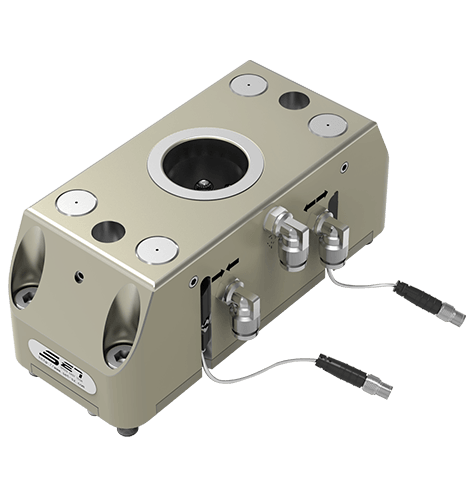 Zero-Point Coupling with Pneumatic Unlock and Self-LockingThis zero-point coupling provides 0.02 mm repeatable positioning and 4 kN clamping force with pneumatic unlock and mechanical self-locking. Integrated detection interfaces support automated robot handling, helping shorten cycle times and improve operator safety.View Product →
The result is a clean production cycle: the spindle spends more time in the cut, the operator works in a safe position away from the spindle, and every pallet lands in the same place as the one before it.
Why Pallet Changers Matter: Uptime, Repeatability, and Safer Operation
A pallet changer is a throughput tool, not a comfort accessory. Once the machine starts cutting pallet A, the operator can load and clamp pallet B at a separate station. The next pallet shift takes seconds, and three measurable benefits appear immediately.
Higher spindle utilization
Setup moves off the machine, so non-cutting time drops from minutes to seconds.
0.005 mm repeatability
Zero-point based pallet changers lock every pallet to the same datum, cycle after cycle.
Unattended operation
A multi-pallet system can work through a job queue overnight with minimal supervision.
Repeatability is what makes a pallet changer valuable in precision work. If the pallet does not land in exactly the same position, every machined feature inherits the positioning error. Tapered locating elements pre-center the pallet, and the ball-lock clamp pulls it flat against the base. That is why zero-point based pallet changers are the standard choice for four-axis and five-axis machining, where a small offset at the pallet interface becomes a visible error at the tool tip.
Pallet Changer Types Compared
The right pallet changer depends on batch size, workpiece weight, and how much automation the operation can justify. These four configurations cover the most common shop-floor situations.
| Type | Loading Method | Best For | Relative Cost |
|---|---|---|---|
| Manual shuttle | Operator pushes or swings the pallet into position | Low-volume, heavy workpieces | Low |
| Rotary two-pallet changer | 180-degree rotation between two pallets | Mixed small batches, quick fixture changes | Medium |
| Multi-pallet pool | Chain or rail presents pallets to the machine | Lights-out production, job queues | High |
| Zero-point pallet coupler | Manual or pneumatic lock on a fixed receiver | Retrofitting pallet capability to a standard VMC | Low to medium |
If the goal is to add pallet capability to an existing machining center without rebuilding the table, a modular pallet quick-change system with a coupler and tray adapter is the most practical path. It provides the same repeatable datum as a full pallet pool at a fraction of the cost.
For shops that already run multiple vises and fixtures, a manual pallet changer with zero-point locators delivers the fastest payback, because the investment is limited to the base plate, locators, and pallets.
How to Choose a Pallet Changer: 5 Buying Considerations
A pallet changer is a long-term purchase, so the decision should be based on numbers rather than brochures. Work through these five points before requesting a quote.
- Pallet size and payload. The pallet must cover the work envelope and support the heaviest combination of fixture and workpiece. Compare the rated payload against the actual mass you will clamp.
- Repeatability and coupling tolerance. For four-axis or five-axis work, choose a locating system with a stated repeatability of 0.005 mm or better.
- Clamping mechanism. Pneumatic clamping suits automated cycles; manual ball-lock clamping is simpler, lower in cost, and still highly repeatable for job shops.
- Safety and interlocks. Automatic pallet changers need sensors to confirm that the pallet is seated, clamped, and cleared before the spindle starts.
- Expansion path. A modular design lets you begin with one pallet and later add a pallet pool or robot tending without replacing the base.
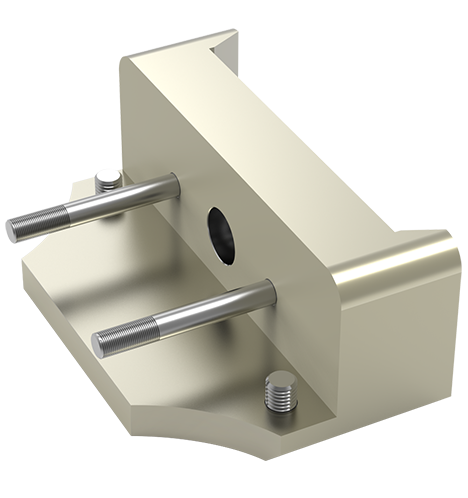 Compact Pallet Tray Adapter for Robotic HandlingThis tray adapter pairs with manipulator couplings for automatic multi-axis robot handling. Its lightweight alumina construction minimizes space usage while maintaining pallet registration independent of table T-slots, preserving repeatable positioning when moving pallets between machines.View Product →
Check the interface between the pallet and the machine table as well. A tray adapter matched to the coupler keeps pallet registration independent of the table T-slots, which is what preserves repeatable positioning when the same pallet moves between machines.
Pallet Changer Applications Across Machining Scenarios
Pallet changers appear wherever the spindle would otherwise sit idle. On a three-axis vertical machine, a simple pallet receiver with a base plate converts a 20-minute job changeover into a 30-second pallet swap. On five-axis machines, the repeatable datum is even more important, because the part is referenced to the trunnion and any relocation error passes through the rotary axes. The same approach used in our five-axis zero-point quick change application keeps the pallet stable across long programs.
Horizontal machining centers benefit the most from pallet automation, because the spindle enclosure is already isolated and pallets can enter through a side door while cutting continues. A horizontal machining center zero-point setup can feed several pallets in sequence with a linear rail, which is the classic basis for lights-out production.
The same logic applies to vertical turret lathes, where replacing a heavy chuck is awkward and risky. A palletized setup lets the operator preload the next chuck outside the machine, then roll it into position with a locating pin and clamp. For large fixtures weighing several hundred kilograms, that is both faster and safer than reaching across the table.
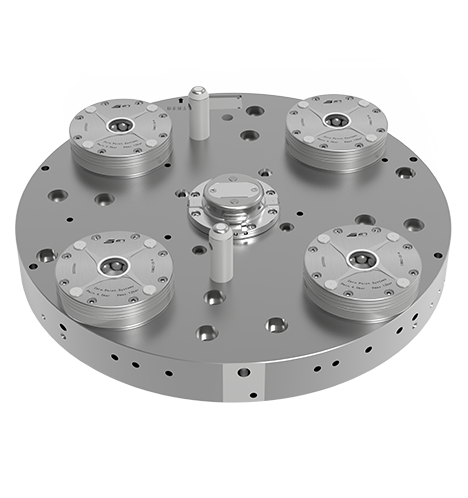 550mm Stainless Steel Base Board for Machine Tool FixturesThis 550 mm stainless steel base board delivers 0.01 mm repeatability and 78 kN clamping, with in-place and release detection. It suits heavy fixtures on lathes and machining centers, allowing safe offline preloading.View Product →
Pallet Changer FAQ
Q1: What is the difference between a pallet changer and a zero-point clamping system?
A pallet changer is the mechanism that moves pallets in and out of the machine. A zero-point clamping system is the locating and locking interface that makes each pallet land in the same position every time. Most modern manual and automatic pallet changers use zero-point technology because it delivers micrometer-level repeatability without indicating.
Q2: How long does a pallet change actually take?
With a manual ball-lock pallet changer, an operator can complete a change in 30 to 60 seconds. An automatic rotary or shuttle changer does it in 10 to 20 seconds, and a full pallet pool system can cycle in under 15 seconds per pallet. The exact time depends on pallet weight, air pressure, and safety door logic.
Q3: Can I retrofit a pallet changer to an existing CNC machine?
Yes. In most cases you only need to install a zero-point receiver or base plate on the machine table and add matching pallets or tray adapters. There is no need to order a special factory option. The main conditions are that the table accepts the mounting pattern and that the pallet height fits within the Z-axis clearance.
Q4: What repeatability can I expect from a zero-point pallet changer?
Well-made straight-column and short-cone ball-lock zero-point locators maintain repeatability of 0.005 mm or better under normal shop conditions. That number describes the pallet datum relative to the receiver; the final machining result also depends on the fixture and how the workpiece is clamped on the pallet.
A pallet changer is best understood as an investment in available spindle time. Whether you choose a manual ball-lock pallet coupler for a job shop or a multi-pallet system for lights-out production, the common thread is a rigid, repeatable interface that removes setup from the critical path. Start by measuring your current changeover losses, then match the pallet changer configuration to your part sizes and batch patterns. The right combination of pallet changer, zero-point locators, and a reinforced base plate will pay for itself in reduced labor, less scrap, and more finished parts per shift.
latest news

- Pallet Changer Guide: Types, Benefits, and How to Choose the Right System
- Heavy Part 5-Axis CNC Machining: Key Workholding and Zero-Point Solutions
- Horizontal Machining Centers: Cut Setup Time with Zero-Point Workholding
- Large Scale CNC Machining: How Workholding and Zero-Point Systems Maximize Output
Latest news
-
Heavy Part 5-Axis CNC Machining: Key Workholding and Zero-Point SolutionsWhen a 500 kg cast housing reaches a 5-axis machining center, the real test begins before the spindle starts. The B-axis tilts the part, gravity shifts the load, and the cutting tool changes directio...Read More
-
Horizontal Machining Centers: Cut Setup Time with Zero-Point WorkholdingThe Real Bottleneck on Horizontal Machining Centers A horizontal machining center (HMC) can run continuously through faces of a part, but the hours lost between jobs are what often hurt the productio...Read More
-
Large Scale CNC Machining: How Workholding and Zero-Point Systems Maximize OutputPicture a 1.4 m cast-iron housing sitting beside a horizontal machining center. The spindle can remove metal quickly, but the real bottleneck is everything before the first chip: lifting the blank, l...Read More
-
Air Gripper Selection Guide: Types, Grip Force, and Automation IntegrationA robot cell that runs five different part numbers in one shift is no longer unusual. The air gripper at the end of the arm picks and places, but when the product changes, the gripper often has to be...Read More
-
CNC Pallet System Guide: How Zero-Point Pallet Quick Change Cuts Setup TimeImagine a vertical machining center with the spindle stopped while the operator swaps a vise, indicates a fixture, and touches off three new tools. Fifteen minutes per changeover seems small until it...Read More
Contact Details
- Address: 1-4 Floors, 17#03, Building 17, No. 269, Xinfeng Road, Xukou Town, Wuzhong District, Suzhou City
- Fax: +86-18112607008
- Tel: 18112607008
- Email: [email protected]
Mobile terminal
Copyright © SET Industrial | Zero-Point Positioning & CNC Workholding ALL RIGHTS RESERVED.